- Francisco Money
- Posts
- Global Fintech report AI ideas

Welcome to The Menu Magic - Finance & AI newsletter
Every week, we will deliver expert insights, in-depth analysis, and curated content to your inbox, helping you navigate the rapidly evolving landscape of AI in finance.
In today’s email:
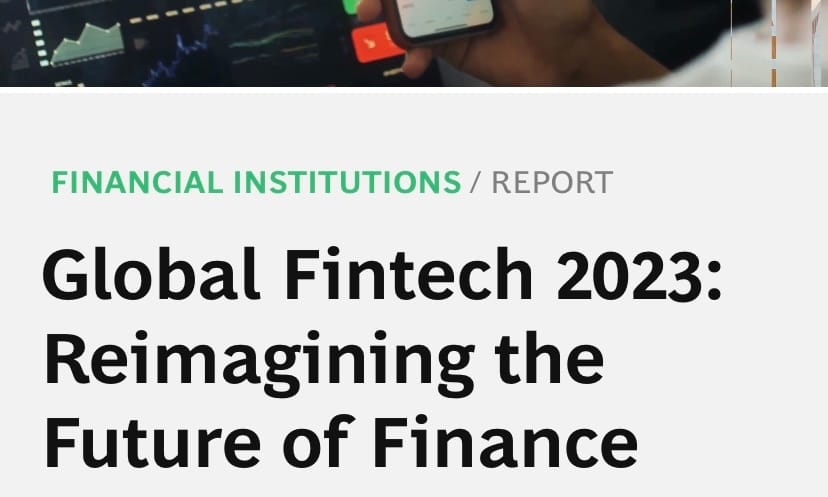
An examination of insights from the Global Fintech 2023: Reimagining the Future of Finance report, a joint effort by Boston Consulting Group and QED Investors.
An exploration of RAMP's AI strategy.
A personal observation: I find it disappointing that there seems to be an influx of credit card-based apps being released, yet lacking substantial innovation.
The Fintech report
The Global Fintech Report of 2023, while thorough in some aspects, seems to skim over the potential implications of Generative AI for the financial services industry. As I ponder the transformations that could be brought about by the deployment of Generative AI in the coming years, I'm aware that progress might be slow given the regulatory nature of the industry. Nonetheless, there are several areas where we could initiate improvements today to forge a more efficient financial ecosystem.
One such area is the development of Automated Financial Advisory Services. With the assistance of Generative AI, we could design automated services capable of delivering bespoke investment advice to clients. By evaluating the financial status, risk acceptance, and investment aspirations of a client, AI can formulate customized investment strategies and proposals. This opens up financial advisory services to a broader audience, making them more accessible and affordable, especially to those who may not have the resources to engage a human financial advisor.
Another potential application lies in Enhanced Customer Service. Generative AI could fuel intelligent chatbots to deliver highly individualized customer service. Capable of managing a variety of customer queries, these chatbots could answer simple inquiries regarding account balances and transaction histories, or tackle more complex issues like disputing charges or applying for loans. With each interaction, the AI can continually refine its understanding of each customer's requirements and preferences, thereby enhancing service personalization and efficiency over time.
Generative AI also has promising applications in Personalized Marketing and Product Recommendations. By analyzing a customer's transaction history, financial behavior, and personal preferences, AI could generate personalized marketing content and product suggestions. For instance, if a customer frequently travels abroad, the AI could suggest a credit card devoid of foreign transaction fees. Conversely, if a customer is accumulating funds for a house down payment, it could suggest a high-yield savings account or a certificate of deposit. Not only does this improve the institution's capacity to cross-sell and upsell its products, but it also elevates customer satisfaction by offering more pertinent and beneficial recommendations.
These are but a few potential applications and I wholeheartedly suggest launching pilot projects around these ideas, or alternatively, consider acquiring existing companies or investing in startups to bring these concepts to life. The remainder of the report offers insightful content; you can explore it further [here]
RAMP´s AI Strategy
Ramp is a company that has reported the fastest growth for a Unicorn in history, reaching more than $100M in ARR in less than 2 years. Ramp offers an expense management solution for businesses and they love to implement changes very fast. As an observer of Ramp's AI strategy, it's clear that the company has made significant strides in integrating artificial intelligence into its financial management platform. But as with all systems, there are questions and potential issues to consider. Let's delve into a more critical exploration of Ramp's AI features (link).
Ramp's Vendor Management system employs a "Price Intelligence" feature that uses AI to analyze transactions and give insights on software spending. While this tool provides cost-saving insights and benchmarks software prices, it raises questions about data accuracy and privacy. One might ask, how accurate are the price comparisons? How does Ramp ensure the privacy and security of the data it collects for price benchmarking? And are there potential biases in the data set that could skew the price comparisons?
Ramp's "Smart Accounting" feature is another area where AI is heavily leveraged. It promises to speed up the monthly close process and streamline bookkeeping. However, the effectiveness of this feature is predicated on the accuracy of its auto-coding. How does the system handle complex transactions that may not fit neatly into predetermined categories? How does it learn from user actions and expert accountant insights, and how quickly can it adapt to changes in accounting practices?
Ramp's approach to expense management also presents some areas for scrutiny. The system is designed to auto-generate receipts and categorize expenses, but the effectiveness of this feature depends on the accuracy of its AI-generated fields, categories, and memos. How accurately does the system categorize different types of expenses? What happens when there's an expense that doesn't fit any of the existing categories? How effectively does the system flag non-compliant expenses, and does it risk flagging legitimate expenses as non-compliant?
Lastly, we come to "Copilot," Ramp's AI-powered assistant. While Copilot seems like a valuable tool for speeding up work and providing financial insights, its effectiveness is heavily dependent on the quality of its AI. How well does Copilot understand user queries? How reliable are its cost-saving suggestions, and how does it ensure that these suggestions align with the company's financial strategy? Also, to what extent can Copilot automate complex tasks without compromising the quality of the output? These are important questions that can help determine the true value of this AI assistant
In conclusion, while Ramp's AI-driven approach offers exciting potential for revolutionizing financial management, it's essential to critically analyze each feature. I look forward to seeing how Ramp addresses these questions and continues to refine its AI strategy.
A personal observation: I find it disappointing that there seems to be an influx of credit card-based apps being released, yet lacking substantial innovation
As someone who closely follows the evolution of financial services, I've recently noticed a considerable surge in credit card-based applications emerging in the market. One of these, which I recently examined, was Suits Me. I had some expectations from it, given the hype around digitization and artificial intelligence in financial services, but I must admit, I was somewhat disappointed.
Suits Me is a debit card service that provides a personal account with no credit checks, offering a simple and quick sign-up process. The service also comes with a Mastercard contactless card, which can be accessed through a mobile application.
This is handy for those who need a quick account setup and a debit card, but it is hardly innovative. Many digital banks offer similar services, with instant account creation and debit card issuing being almost the norm in the industry.
In summary, while services like Suits Me provide an accessible and straightforward banking solution, they don't push the envelope in terms of innovation. There is so much potential for groundbreaking work in the financial services industry. I would love to see more companies taking advantage of the latest technologies to provide smarter, more intuitive services that truly revolutionize the way we handle our finances.
Could you create a new venture that transforms the health of the planet and people?
Zinc VC is looking to invest in 70 innovative individuals who want to redirect their careers and build a mission-driven business from scratch on their next Venture Builder focused on eliminating environmental threats to our health.
Founders will be tackling the harmful impacts of chemical pollution, climate change, and biological hazards on our health and wellbeing. In ensuring we can live long, healthy and meaningful lives, there is a need to transform all aspects of our environment including:
Food systems
Water security
Air quality
Built and urban environments
Designed to launch you as a Founder, you will join the 12-month Venture Builder full-time in October 2023 and match with a co-Founder from a curated cohort of world-class talent. You will receive up to £250k in early funding and gain access to mentorship & support from expert Fellows and coaches, investors, and Zinc’s in-house R&D team.
If you’re interested in embarking on this exciting new journey, find out more and apply here😃 Tell them that you hear from Francisco Cordoba, a Zinc entrepreneur.
I'd love to hear your feedback on today's newsletter! Is there a specific type of content you'd like to see more of in the future? Since I'll be releasing a new edition each week, I welcome any suggestions or requests you may have. Looking forward to hearing your thoughts!
The Menu Magic is written by Francisco Cordoba, a Fintech entrepreneur living in London.